Succession Beyond Replacement: Building Leadership Capability for an Uncertain Future
It is difficult to define the leadership of the future in clear-cut terms. Succession planning therefore needs to be about more than who is next in line for a senior role. The question is instead what situations future leaders will face and what capabilities they will need to navigate them. The starting point must be the organisation’s future direction, not today’s roles or individuals.
Key Takeaways
Start with strategy when defining the leadership of the future, rather than today’s roles or individuals.
Use scenarios to understand what different futures may require and which capabilities will be needed regardless of what happens.
Ensure that day-to-day learning continues as AI changes work, so that experience, judgement and vital knowledge are not lost.
Start with the future, not the present
A common approach to succession is to use today’s leaders as the template for the next generation. This is understandable, but also risky. It makes it easy to replicate the capabilities that worked yesterday rather than consider what will be needed to succeed tomorrow.
In a recent conversation on leadership hosted by Alumni Global, one message came up repeatedly: succession planning and business strategy must be connected. Rather than becoming fixated on individuals and titles, we need to map the capabilities and behaviours required to take the organisation where it wants to go.
The same challenge emerged in a recent question we put to people in our network about their greatest succession challenges. Of the 332 respondents, 35 per cent said they lacked an established leadership pipeline. A further 17 per cent were unsure which leadership capabilities would be needed in the future. This is telling: many recognise the importance of succession but lack either the structure or a shared language to move from insight to action.
AI is changing how organisations create and retain knowledge
AI is changing both who does what and how knowledge is created, retained and passed on. This, in turn, affects how organisations build capability. Much learning has traditionally taken place in the course of everyday work: new employees work closely with experienced colleagues, managers coach future leaders, and specialist knowledge is transferred through practical collaboration.
“Although AI can provide a well-formulated answer, the experience, trade-offs and subtle signals behind a truly good decision are not always visible. The risk is that we retain the answer but lose the understanding of how and why we arrived at it.”
As AI becomes an integral part of work, that model can no longer be taken for granted. If AI takes over parts of analysis, problem-solving and operational work, less experienced employees will have fewer opportunities to observe how more experienced colleagues reason, test their own judgement and receive feedback in real situations. More tasks can also be completed more quickly and independently, reducing spontaneous conversations and joint problem-solving. And although AI can provide a well-formulated answer, the experience, trade-offs and subtle signals behind a truly good decision are not always visible. The risk is that we retain the answer but lose the understanding of how and why we arrived at it. This matters particularly because AI creates the greatest value when the technology is combined with deep organisational knowledge and sound judgement: how decisions are made, how risk is assessed, what makes for a good client dialogue and how complex problems have been solved in the past.
If these avenues for learning are weakened, the organisation may lose the tacit knowledge on which both AI and human judgement depend. We must therefore deliberately create ways to preserve and pass on experience. At the same time, we need to develop leaders who are willing to challenge AI-generated answers, can place them in the right context and combine technical understanding with deep knowledge of the organisation.
Define the strategic questions
The question ‘What does the future look like?’ is simply too broad to yield a useful answer. Scenario planning becomes relevant to succession only when it is linked to decisions the organisation may actually need to make and to the capabilities leaders need in order to make those decisions well.
How might our market and business model change over the next three to five years?
What developments could fundamentally alter our strategic priorities?
What must our organisation be able to manage under different conditions?
What qualities in our leaders would enable us to act?
Boards and executive teams can work with several possible future scenarios and distinguish between what can be predicted with reasonable confidence and what is genuinely uncertain.
For each scenario, we need to describe what has changed in the external environment, how clients, competitors and other stakeholders are responding, what this means for the business model, which strategic choices become more important and what the organisation needs to do differently.
When each scenario is translated into implications for strategy, organisation and leadership, it becomes clearer what must be protected, what may need to change and which decisions could prove critical. It also becomes possible to distinguish between leadership capabilities that will be needed whatever happens and those that become important only in certain circumstances.
It helps to distinguish between:
No-regret moves: actions that strengthen the organisation regardless of which scenario materialises.
Choices that depend on what happens: decisions that become relevant only when certain signals emerge.
Capabilities that need to be built over time: strengths that require patience and deliberate investment.
Options worth keeping open: partnerships, investments or structures that provide future flexibility.
The qualities highlighted in Alumni Global’s conversation on succession included curiosity, resilience, humility and courage. As AI becomes increasingly integrated into our workplaces, processes and ways of working, we must also safeguard what built the organisation in the first place. Where do people develop experience, deep organisational knowledge, judgement and trust? We need to understand and protect these sources so that we do not lose our bearings as the pace of change continues to accelerate.
Succession planning for an uncertain future is therefore about more than identifying who is ready for the next role. Strategy, scenarios and day-to-day learning need to be connected. We need to understand which capabilities different futures may require, create opportunities to develop them and, at the same time, preserve the knowledge and judgement on which both human leadership and the responsible use of AI depend.
Five questions to consider
What assumptions about the future shape our succession decisions today?
Are our scenarios sufficiently distinct to reveal where genuine capability gaps may arise?
Which leadership capabilities will remain valuable regardless of how the future unfolds?
How often do the board and executive team pause to interpret new signals and consider what they mean for strategy?
Where do future leaders gain the experience, organisational knowledge and judgement they need – and how might AI strengthen or weaken that learning?
Succession planning in summary
What should succession planning start from?
Succession planning should start from the organisation's future direction, not from today's roles or the people in them. Using today's leaders as the template for the next generation makes it easy to replicate the capabilities that worked yesterday. In a leadership conversation hosted by Alumni Global, one message came up repeatedly: succession planning and business strategy must be connected, which means mapping the capabilities and behaviours needed to take the organisation where it wants to go.
What are the biggest succession challenges?
When Alumni Global asked people in its network about their greatest succession challenges, 35 per cent of the 332 respondents said they lacked an established leadership pipeline, and a further 17 per cent were unsure which leadership capabilities would be needed in the future. Many recognise that succession matters but lack either the structure or a shared language to move from insight to action.
How does AI affect succession planning?
AI changes who does what and how knowledge is created, retained and passed on. When AI takes over parts of analysis, problem-solving and operational work, less experienced employees get fewer chances to see how experienced colleagues reason, test their own judgement and receive feedback. Åza Skoog of Alumni Global warns that organisations then risk retaining the answer but losing the understanding of how and why they arrived at it.
How can boards use scenarios in succession planning?
Boards and executive teams can work with several possible future scenarios and separate what can be predicted with reasonable confidence from what is genuinely uncertain. For each scenario they describe what has changed, how clients and competitors respond and what it means for the business model. That shows which leadership capabilities will be needed whatever happens, and which become important only in certain circumstances.
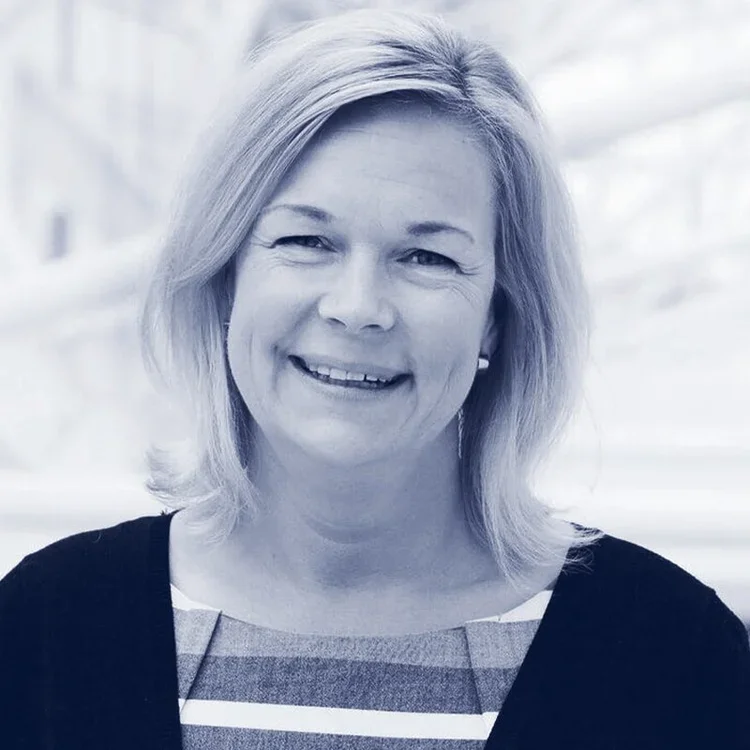
About the author

Partner, Deputy CEO and Managing Director, Nordics, Alumni Global
Åza Skoog brings more than 25 years of experience in leadership and talent advisory, supporting organisations in building strong leadership teams and driving sustainable growth.
Her work focuses on helping clients develop their businesses and people, with particular emphasis on growth and transformation. Drawing on her own experience of building and leading successful operations, Åza offers a practical perspective on how to secure the right capabilities to scale organisations and meet evolving market demands.
At Alumni Global, we believe that the key to unleash potential in people and organisations is great leadership. Partnering with you, we help equip your organisation to make a difference.
We tailor our wide range of leadership services to your unique requirements, helping your organisation thrive and support your people’s professional development.
Our portfolio of services includes:
Do reach out for a dialogue about your unique situation and requirements.
Contact us