Succession as a Strategic Imperative: Building Leadership for an Uncertain Future
Succession as a Strategic Imperative: Building Leadership for an Uncertain Future
In a world shaped by geopolitical uncertainty, technological disruption, AI-driven transformation, and shifting workforce expectations, leadership succession is a strategic business imperative. But how can organisations best build leadership pipelines capable of navigating complexity, sustaining growth, and creating long-term value?
This was the central theme when Alumni Global recently gathered an experienced panel of leaders to discuss how organisations can build leadership pipelines capable of navigating complexity, sustaining growth, and creating long-term value.
Moderated by Åza Skoog, Managing Director, Alumni Global Nordics, the discussion brought together perspectives from corporate leadership, board governance, organisational psychology, and high-growth companies.
Our panel consisted of:

Björn Axelsson
CHRO, Sandvik Group
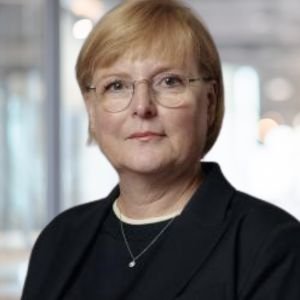
Karin Eliasson
Active in nomination committees, Board Chair, Board Member and former CHRO and Chief Sustainability Officer
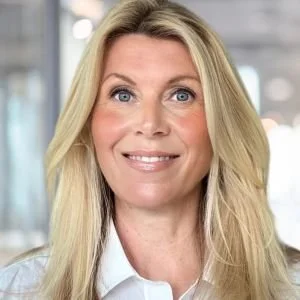
Sara Arildsson
Investor, Advisor, Board Member and former CEO of Teamtailor and Fortnox, and former COO of iZettle

Mattias Lowebrant
Licensed Psychologist and Leadership Consultant, Alumni Global
While the panellists represented very different organisational realities, from global industrial groups to hypergrowth technology companies, a common message emerged: succession is no longer primarily about replacing leaders. It is about ensuring future capability.
Succession Has Become More Complex
One of the first questions addressed was whether succession planning has become more difficult in today's business environment. For Björn Axelsson, the answer was unequivocal: “Very much more complex,” he noted.
“The challenge is no longer simply identifying successors for existing roles. Instead, organisations must prepare leaders for jobs that may not yet fully exist.”
Geopolitical shifts, regionalisation, digital transformation, AI, electrification, and evolving business models all place new demands on leadership. Organisations must not only identify future leaders but also ensure they can navigate entirely new contexts. “At Sandvik,” Axelsson explained, “we need leaders who can navigate technology shifts and understand how to create value in a rapidly changing environment.”
Strategy Must Drive Succession
Throughout the discussion, one theme surfaced repeatedly: succession planning cannot be separated from business strategy.
Karin Eliasson emphasised that effective board work begins with understanding where the company is heading. “Where are we today? Where are we going? And what critical competencies will we need in the future?”
Rather than focusing on individual personalities, she advocated for competency-based discussions and structured capability mapping. This strategic lens was echoed by all panellists.
“Where are we today? Where are we going? And what critical competencies will we need in the future?”
Sara Arildsson described how rapidly scaling companies often lack the luxury of highly formalised succession processes. Yet they still need to build readiness. “We need a preparedness plan,” she explained. “We need to understand what competencies we have, how we develop people, and whether we have the capabilities required for the next phase.”
The lesson was clear: succession should not be viewed as an isolated HR exercise. It is fundamentally about ensuring the organisation has the leadership capabilities required to execute its future strategy.
The Board’s Critical Role
The panel also explored the role of boards in succession planning. According to Eliasson, most boards recognise succession as an important topic. The challenge is often less about awareness and more about execution. “Many boards still struggle to find the right format and process.”
She highlighted the importance of a strong board chair who continuously drives the agenda. In the most effective organisations, succession is not discussed once a year as part of an annual review process. Instead, it is a continuous conversation. “In the good companies, this is a continuous process,” Eliasson observed.
Arildsson added that boards play a particularly important role in supporting CEOs during periods of transformation. Leadership can be an isolating role, especially in fast-growing organisations. A strong board provides not only governance but also challenge, perspective, and trusted counsel. “You need a board that understands the business, understands the technology, and can challenge and support the leadership team.”
Beyond Performance: Identifying Future Potential
One of the most engaging parts of the discussion centred on a question familiar to every leadership team: How do we identify people who can succeed at the next level?
Mattias Lowebrant highlighted a common challenge: organisations often promote individuals based on current performance rather than future capability. Success at one level does not automatically predict success at another. Instead, organisations need to understand the behaviours and capabilities that drive success in future roles. “We need to understand what competencies consist of on a behavioural level.”
Lowebrant argued that organisations should focus less on job titles and more on the behaviours required to realise strategy.
At Sandvik, Axelsson described a growing emphasis on potential, learning agility, and development assessments. “The trend is moving more and more toward potential.”
“Organisations need to understand the behaviours and capabilities that drive success in future roles. What do the competencies we wish to see consist of on a behavioural level?”
Yet the panel also acknowledged the limitations of traditional “high-potential” labels. Eliasson challenged not only the concept but the terminology itself, arguing that the label can be problematic because it suggests that some individuals have potential while others do not. She said, “Who doesn’t have potential?”
Her point resonated strongly with the audience. Leadership development should not become an exercise in creating elite groups while overlooking broader organisational talent. Instead, organisations must help individuals discover where their strengths, motivations, and aspirations align with future opportunities.
The Leadership Qualities That Matter Most
When discussing the leadership capabilities needed for the future, several themes repeatedly surfaced.
Curiosity
Axelsson identified curiosity as one of the most important leadership traits today. “Leaders need to be prepared to reconsider their frame of reference.”In a rapidly changing world, assumptions quickly become outdated. The best leaders continuously learn and adapt.
Resilience
The panel noted that many organisations have navigated successive crises over recent years. As Axelsson put it: “It is constant change management now.”Leaders need the resilience to manage uncertainty while maintaining focus and energy for their teams.
Humility
Arildsson emphasised the importance of self-awareness. “Hire people who are better than yourself.” Great leaders understand their limitations and deliberately build teams that complement their strengths.Courage
The ability to challenge assumptions, encourage diverse viewpoints, and create psychological safety emerged as another critical theme. Organisations that recruit people who always agree risk stagnation. “You want people who dare to say: ‘I think this is wrong,’” Arildsson noted.
Culture: The Invisible Enabler
Although succession planning often focuses on structures and processes, the discussion repeatedly returned to culture. The panel agreed that leadership development cannot succeed without a culture that supports learning, feedback, and growth.
At Sandvik, leadership development is deeply embedded in the organisation. Axelsson described how the company intentionally overinvests in leadership programs, viewing leadership capability as a long-term strategic asset.
Meanwhile, Lowebrant highlighted the importance of feedback. Research consistently shows that leaders who actively seek feedback tend to be more effective. “The ability to ask for feedback is incredibly important.” Feedback creates adaptability, and adaptability creates growth. And growth creates future leaders.
Succession as a Shared Responsibility
As the discussion concluded, the panel returned to the importance of not treating succession as the sole responsibility of HR.
It requires collaboration between boards, CEOs, leadership teams, and HR functions. It requires strategic clarity, organisational courage, and a long-term perspective. Most importantly, it requires organisations to move beyond viewing succession as a replacement exercise and instead see it as a capability-building process.
As the panel repeatedly emphasised, the future will not be led by the same leaders who succeeded in the past. The organisations that thrive will be those that continuously develop curious, resilient, adaptable leaders who are prepared not only for the challenges they can see, but also for the ones still waiting around the corner.
“Organisations must move beyond viewing succession as a replacement exercise and instead see it as a capability-building process.”
Contact Alumni Global - Executive Search & Leadership Services
At Alumni Global, we believe that the key to unleash potential in people and organisations is great leadership. Partnering with you, we help equip your organisation to make a difference.
We tailor our wide range of leadership services to your unique requirements, helping your organisation thrive and support your people’s professional development.
Our portfolio of services includes:
Do reach out for a dialogue about your unique situation and requirements.