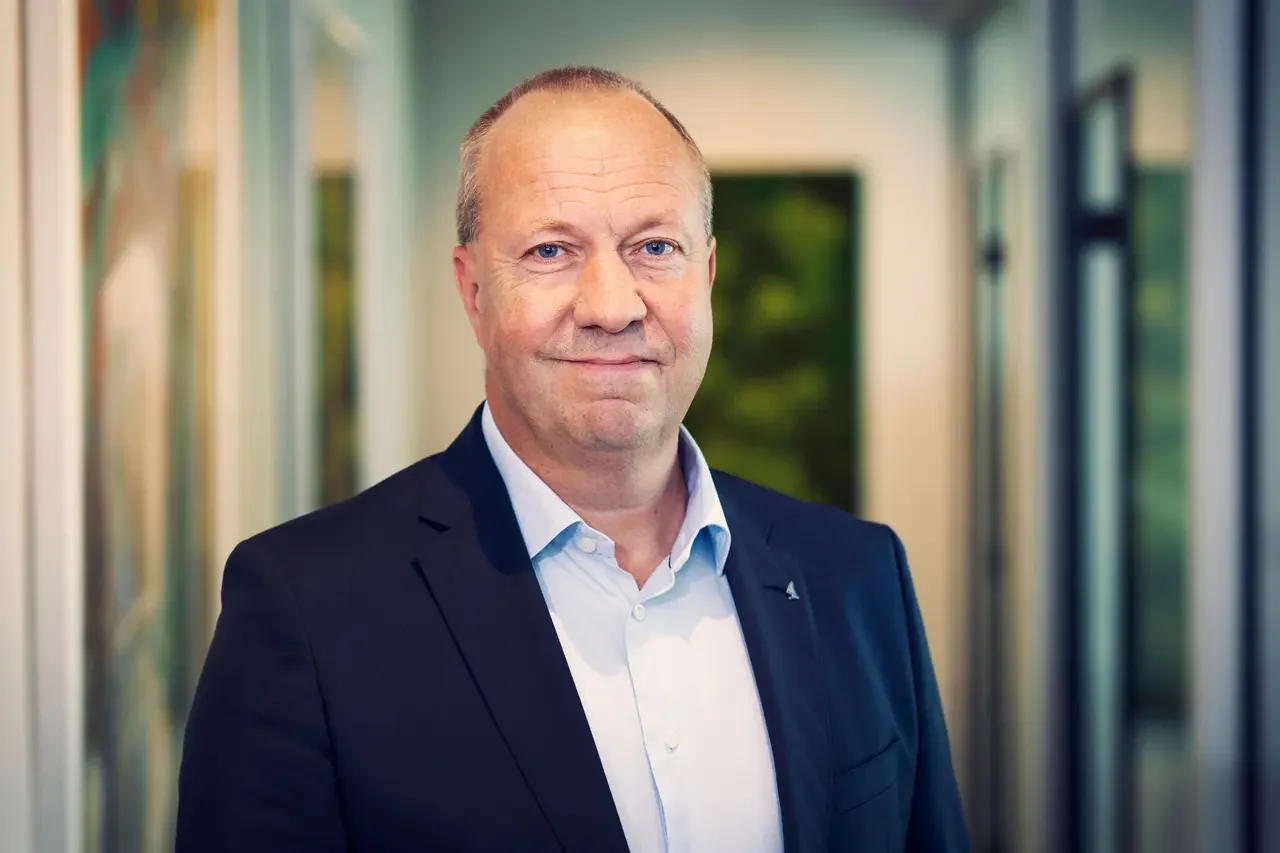
Building for the next generation
Building for the next generation
Family-owned businesses often operate with a longer time horizon than other forms of ownership, such as listed companies or private equity-backed businesses. This influences not only how investments are made, but also how leadership, culture and talent are viewed. When the aim is to develop a business across generations, leaders need to combine commercial development with respect for the company’s identity and values. And as the business grows, it often becomes increasingly important to remain true to its foundations and not lose sight of its direction. At a time characterised by growing complexity, rapid technological development, AI and an accelerating pace of change, it is worth remembering that people-centred leadership is not at odds with progress and competitiveness – on the contrary, it can be a crucial prerequisite. The long-term perspective of family-owned businesses can therefore provide valuable inspiration for other types of organisations as well.
At Alumni Global, we have worked for many years in an advisory capacity with family-owned businesses and their owners, boards and executive teams. One such company is Sandberg Development. Alumni through Lars Navéus, supported the recruitment of Stefan Persson as President & CEO and has since continued to serve as a long-term adviser to the company on leadership and talent matters.
We met Stefan to discuss what other companies can learn from the family-owned business perspective – and how long-term thinking, technological development and a consistent focus on people can strengthen competitiveness.
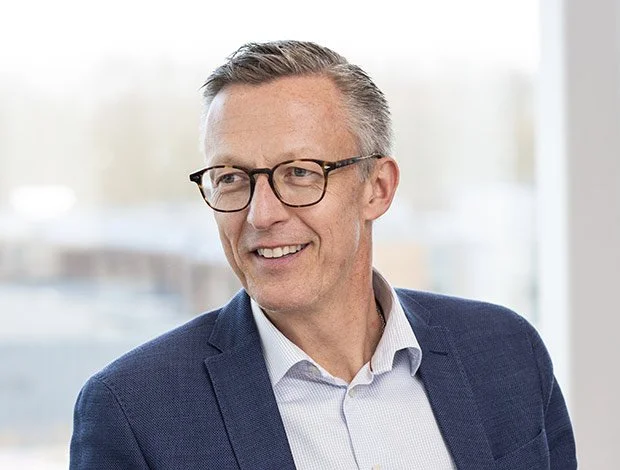
Stefan Persson
President and CEO of Sandberg Development
A company built to last
Sandberg Development is a family-owned investment company with roots in southern Sweden. Founded in 1959 by entrepreneur Gunnar Sandberg, the company today makes long-term investments in technology-driven businesses operating in sectors critical to society. Its activities are focused on three areas: water, security and quality of life. Today, the company is led by Per Sandberg, the second-generation owner, who has continued to develop the business in line with the family’s long-term investment philosophy: reinvesting capital to create new companies, innovations and sustainable value across generations. The Group invests in technology-driven businesses and today comprises 19 portfolio companies with approximately 1,600 employees.
Sandberg Development is not simply an owner of capital, but an active partner to its portfolio companies. Close relationships, knowledge sharing and short decision-making processes are central to its model.
For Stefan Persson, this means that his remit extends well beyond the next reporting period.
“Our most important task is to build the right foundations for future generations. It is very easy to tear something down, but much harder to build it up”
His role is to continue the development journey initiated by the owner family: making the business broader, deeper and more resilient, while digitalising the Group and preserving its fundamental values.
This perspective differs from environments where leadership is primarily assessed against shorter-term profit and reporting cycles. In a family-owned business, every decision must also be considered in terms of the organisation and culture that will ultimately be passed on to the next generation.
Culture is business-critical
A recurring theme in our conversation with Stefan is that company culture is not a soft issue that sits alongside the business. It is a prerequisite for the organisation’s long-term development.
This is evident in recruitment, among other areas. Skills and experience are important, but it is equally crucial that a new leader shares the company’s values and understands the owners’ perspective.
Stefan describes his own recruitment process:
“The first interviews were not about my CV at all. They were about values, what we believe is important in life, what we want to achieve going forward and what drives us.”
For a family-owned business, where owners, the board and management often work closely together over many years, cultural alignment becomes particularly important. A leader needs to be able to develop the business without losing the trust, identity and principles that have been built over generations.
This is also an important aspect of the partnership between Sandberg Development and Alumni. Stefan highlights the value of an adviser who already knows the company’s culture and understands the kind of people who will thrive in that environment. This means the recruitment process does not begin with a formal role specification, but with a deeper understanding of the owners’ ambitions, the context of the business and the leadership required.
In a complex world, leadership matters more than ever
Technological development is not the only factor changing the conditions in which companies operate. Stefan describes an external environment in which several major forces of change are at work simultaneously.
“We have to stay true to our strategy. The world around us may change, but we have to believe in what we are doing.”
AI is developing at a pace few could have imagined only a few years ago. Geopolitical shifts are affecting global value chains and trade. Climate change and the energy transition are reshaping markets, while European companies need to strengthen their capacity for innovation in the face of increasingly intense international competition. For many organisations, this creates greater uncertainty. For Sandberg Development, the conclusion is different.
For Stefan, it is precisely in periods of rapid change that leadership is put to the test. As the world becomes more complex, organisations need leaders who can provide direction, make decisions despite uncertainty and help people navigate change.
AI increases the value of human experience
Historically, Sandberg Development has been an industrial group with a strong focus on hardware, engineering and manufacturing. In recent years, digitalisation and new technologies have become an increasingly important part of the Group’s development.
“Many people see AI as a threat. But this is actually an opportunity. It is not simply about making processes more efficient and removing people, but about achieving more with the same number of people, creating greater value and accelerating development.”
Many companies today are discussing how AI can make their operations more efficient. Stefan Persson sees enormous potential in the technology, but believes the discussion sometimes starts from the wrong premise. For Sandberg Development, AI is not about replacing people, but about enabling them to do more.
At the same time, he points to something that is often overlooked in the AI debate: technology is only as good as the knowledge on which an organisation builds its use of it. He emphasises that technology alone cannot replace experience and an understanding of the business.
An AI tool can process information more quickly, but it cannot independently determine which questions are relevant, how a particular environment works or what the consequences of a decision might be. As technology develops, the experience-based knowledge held by engineers, specialists, salespeople and leaders therefore becomes more valuable, rather than less.
The challenge for many companies will be both to harness AI and to ensure that human knowledge is passed on. As senior employees leave and younger generations move into different types of roles, there is a risk that important domain knowledge will disappear before it can be transferred.
“If you don’t have the domain knowledge, AI won’t deliver good results. You have to understand the business to be able to ask the right questions.”
Here, the long-term perspective of family-owned businesses can provide inspiration for other forms of ownership too. When an organisation is built to last, knowledge transfer, succession and the development of the next generation of leaders become strategic priorities, rather than simply personnel matters.
Actively building the next generation
When Stefan joined Sandberg Development, he saw a need to complement the experience already within the organisation with new perspectives and younger talent. The company therefore launched a Graduate Programme for recently graduated engineers and business graduates. Over twelve months, participants work closely with the business, gain experience across different parts of the Group and develop alongside more experienced colleagues.
Interest in the programme has grown significantly. According to Stefan, the number of applicants increased from around 50 for the first intake to approximately 900 for the third. The programme is a way of attracting talent, but also of creating a more structured transfer of knowledge and culture.
“It is important that young people have the opportunity to work alongside us for a period of time before they take over.”
Stefan explains that succession had not previously been an explicit focus within the organisation. By bringing in younger people and giving them exposure to different businesses, markets and leaders, the company is now building a broader pool of future candidates.
This illustrates a fundamental lesson: long-term thinking does not happen by itself. It requires companies to actively identify, develop and give responsibility to the people who will one day take the business forward.
Leadership is about direction, not control
The accelerating pace of change and increasing complexity are also changing the type of leaders organisations need.
“You need leaders who are willing to let go of control and allow employees to take responsibility. Top-down leadership disappeared a long time ago.”
Stefan looks for leaders with broad experience and the ability to see the bigger picture – people who have encountered different types of situations and can therefore weigh up commercial considerations, technology, people and the wider environment when making decisions.
But experience alone is not enough. In a world where change is happening rapidly, no leader can have all the answers. The role is to set a clear direction and create an organisation in which people have both the authority and the confidence to make decisions close to the business.
For Stefan, trust is not a soft leadership issue, but a prerequisite for creating an organisation capable of acting decisively.
“If you want to build momentum, responsibility and authority have to be pushed out into the organisation. You need leaders who are comfortable with that.”
He believes the Nordic leadership model, with short decision-making processes and less hierarchy, provides a strong foundation. At the same time, leaders need the courage to make decisions when circumstances demand it. It is about finding the right balance between involvement and clear leadership.
The physical workplace as a carrier of culture
At a time of hybrid working and digital meetings, Stefan also argues for the value of physical presence. Human interaction becomes particularly important as more of our work becomes digital.
“If you want to be part of where things are discussed and decisions are made, you need to be here. It happens over a cup of coffee.”
This is not about monitoring attendance, but about recognising that many of the most important conversations and relationships arise informally. People develop through feedback, attention and the feeling of being part of something. That is difficult to recreate fully in a two-dimensional meeting environment.
Sandberg Development therefore actively invests in environments where people want to come together. Stefan talks about the restaurant, shared meals, fitness facilities and other features that help create a cohesive workplace.
“You have to combine technology with the human element.”
What other companies can learn from the family-owned perspective
Not all companies can or should be run in the same way. But there are several lessons from family-owned businesses that are equally relevant to other ownership models;
The first is the value of a clear time horizon. When a company is viewed as something to be developed and ultimately passed on, this influences both investment and leadership decisions.
The second is that culture needs to be treated as a strategic asset. Values only become credible when they influence which leaders are recruited, how authority is distributed and which behaviours are recognised and rewarded.
The third is that knowledge transfer must be organised. At a time of AI, more frequent career changes and generational transitions, companies can no longer assume that experience will automatically be passed on.
Finally, Sandberg Development’s example demonstrates that people-centred leadership is not at odds with technological and commercial development. On the contrary, it can be a prerequisite for ensuring that technology is used effectively and that change is sustainable.
Family-owned businesses such as Sandberg Development demonstrate that taking a long-term perspective does not have to mean being cautious or slow. Instead, it can provide the confidence to invest in people, technology and ideas whose full value will only become apparent over time. Long-term thinking is not about changing more slowly. It is about changing without losing your sense of direction.
Leadership in family-owned businesses requires more than a successful appointment
Recruiting a CEO for a family-owned business is rarely just about finding someone with the right experience or expertise. The leader needs to understand the dynamics between owners, the board and executive management, be able to preserve and strengthen the company’s culture, while at the same time driving development in a changing world.
This is why Alumni Global builds long-term relationships with many family-owned businesses – not only in connection with individual executive appointments, but as a strategic adviser on leadership, succession and future talent needs.
Sandberg Development is one example of such a partnership. Alumni recruited Stefan Persson as President & CEO and continues to support the company on leadership and talent matters today.
About Lars Navéus

Lars Navéus
Partner and Senior Consultant, Alumni Global
Email
Lars Navéus is a Partner and Senior Consultant at Alumni Global and has worked in executive search, board recruitment and strategic leadership advisory for almost three decades. He advises owners, boards and CEOs of listed, private equity-backed and family-owned businesses, both across the Nordic region and internationally.
Over the years, he has developed particularly strong expertise in leadership within family-owned businesses, where long-term thinking, culture and trust are often just as critical as business performance.
—> Read more
“As the world changes faster than ever, the leadership principles that many family-owned businesses have long been built on – long-term thinking, culture, trust and putting people at the centre – are more relevant than ever. Our role is to help owners and boards identify leaders who can develop the business without losing what has made it successful.”