Leading Through Uncertainty: Nordic Perspectives on Leadership in a Changing World
Leading Through Uncertainty: Nordic Perspectives on Leadership in a Changing World
At Alumni Global's Öresund Spring Summit gathering in Malmö, four of the Nordic region's most accomplished business leaders came together to discuss what leadership requires in a world defined by geopolitical tension, technological disruption and economic uncertainty.
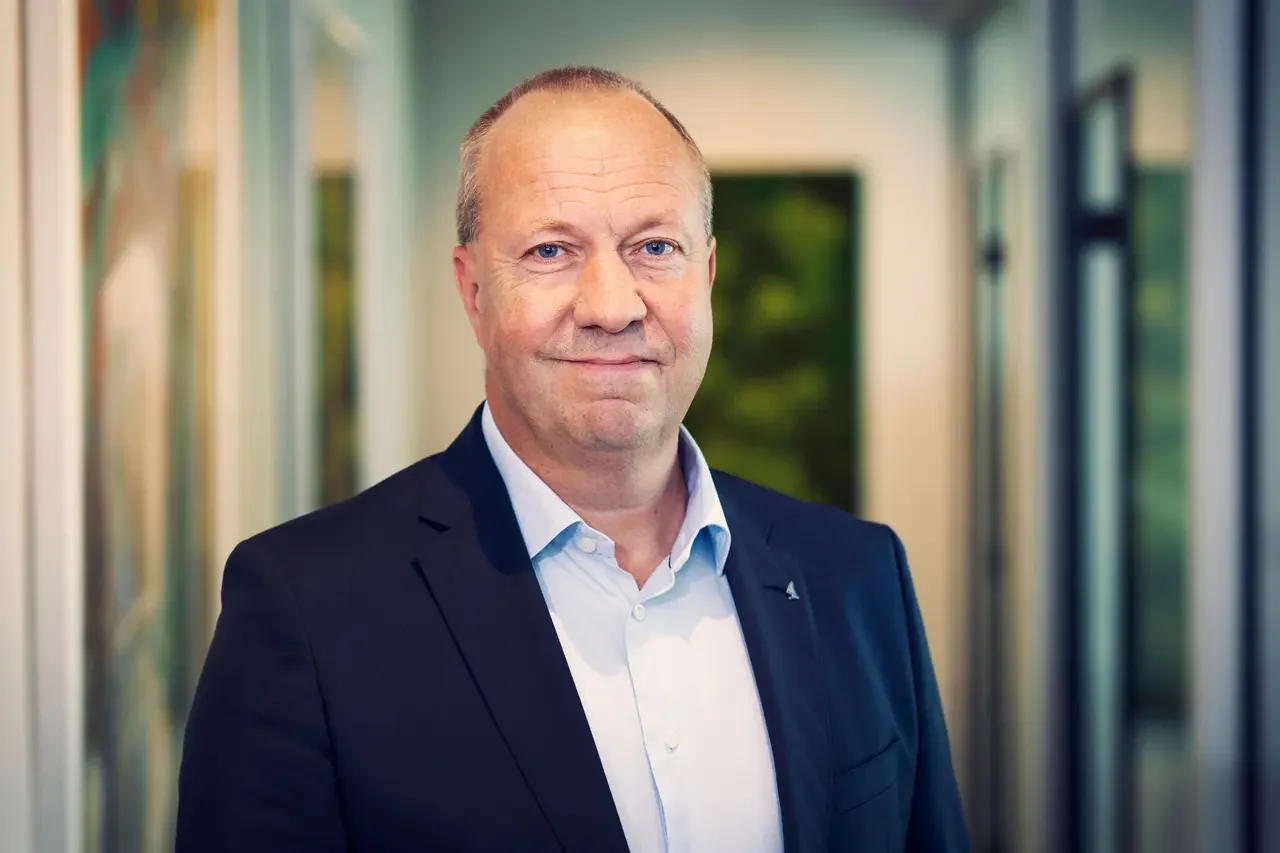
Moderated by Alumni Global CEO Magnus Tegborg, the panel featured Anna Borg, President and CEO of Vattenfall; Mikael Bratt, President and CEO of Autoliv; Malou Aamund, board chair and technology leader; and Björn Rosengren, former CEO of ABB and one of Sweden's most respected industrial leaders.
While their industries differ significantly, a common message emerged: uncertainty is no longer an occasional challenge; it has become the leadership context.
Our panel consisted of:
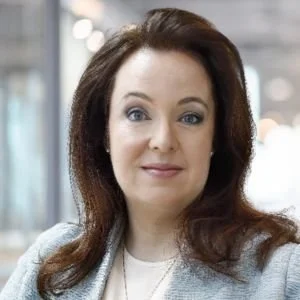
Anna Borg
CEO of Vattenfall since 2020. She has over 20 years’ experience at the company in sales, trading, and business development. She has led the company’s bold pivot to enable fossil-freedom across Europe, including landmark investments in nuclear, hydropower, offshore wind, onshore wind and solar. Between 2015–2017, she led Klarna’s Nordic operations. Today she serves on the boards of FAM AB and Ruter Dam and has been named Sweden’s Most Powerful Woman (2023), CEO of the Year (2022), featured on TIME100 Climate list and Fortune’s Most Powerful Women.
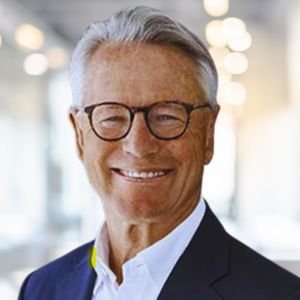
Björn Rosengren
Prominent Swedish business executive with a long career within the industrial sector, known for leading large global engineering firms. He has served as CEO of Sandvik, ABB and Wärtsilä Corporation. Today he is a professional non-executive board director with previous engagements with the Board of Directors for companies such as Sandvik and Danfoss A/S. Today he serves as Vice-Chairman for Hexagon and as member of the Board of The World Childhood Foundation.
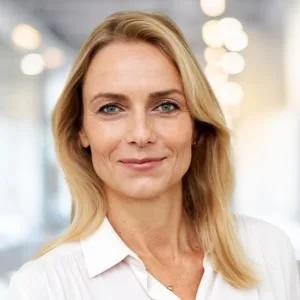
Malou Aamund
Experienced board chair and non-executive director with a strong background in technology, digital transformation, and corporate governance. Earlier in her career, she held senior executive roles in global technology companies, including positions at Google, Microsoft, and IBM. She currently serves as Chair of Matas Group A/S, a listed omni-channel consumer company, and holds board positions across retail, technology, and investment-related businesses. In 2023, Malou received the Women’s Board Award in recognition of her contribution to board leadership. Her current board roles include the LEGO Foundation, KIRKBI (the owner of the LEGO Group), and KIRKBI Invest.
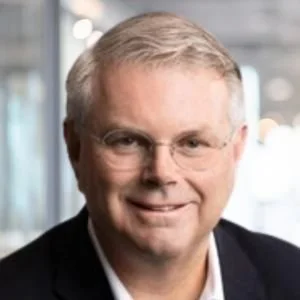
Mikael Bratt
President and CEO of Autoliv, a global leader in automotive safety systems. He is also member of the company’s Board of Directors. Mikael’s prior experience consists of a long successful career within Volvo Group. Throughout his leadership he has expertly navigated the evolving automotive landscape, successfully delivering innovation, global operations and sustainable growth in the organisations he has served. Mikael currently also serves as a member of the Board of Directors of Gränges AB.
When disruption becomes the norm
For Anna Borg, who leads one of Europe's largest energy companies, global events now affect business in ways that would have been difficult to imagine only a few years ago.
"Much of what happens globally now impacts the business directly in a different way than before," she noted. She highlighted how geopolitics, energy security, and market volatility have become inseparable.
The energy sector is a clear example. Conflicts that affect global gas supplies can quickly influence energy prices across Europe. This creates uncertainty for energy companies and for businesses throughout the economy.
Yet Borg stressed that leaders must avoid becoming consumed by short-term turbulence.
“It is important to have a long-term strategy and understand whether what is happening now actually changes that strategy or whether it is something we need to manage through.”
The challenge, she suggested, is maintaining strategic direction while remaining flexible enough to respond to rapidly changing conditions.
A world that keeps changing
Mikael Bratt reflected on a similar reality within the global automotive industry. "We haven't really had a normal year since COVID," he observed.
“It’s important to focus on what we can control and do that exceptionally well. ”
After the pandemic, there were supply chain disruptions, wars, tariffs, and geopolitical tensions. These issues forced leaders to address topics that were not part of their normal agenda before.
Yet Bratt argued that leadership during such periods requires calm and focus rather than constant reaction. "We need to focus on what we can control and do that exceptionally well," he said. "The majority of the organisation must remain focused on improving the core business every day."
His perspective highlights an important leadership principle: while leaders cannot control external events, they can create clarity, stability and confidence within their organisations.
The rise of strategic adaptability
From her perspective as a board chair and former technology executive, Malou Aamund argued that the scale of today's disruption would have been difficult to predict even five years ago.
Few leaders, she pointed out, would have anticipated a combination of global pandemics, wars, artificial intelligence, demographic shifts and rapidly changing labour markets occurring simultaneously.
As a result, traditional planning approaches are becoming less reliable. Rather than trying to predict the future, Aamund emphasised adaptability. Scenario planning is valuable not for precise forecasts, but for preparing organisations to respond to the unexpected.
"What matters is whether you have the capabilities and agility to make decisions when circumstances change," she suggested. Adaptability becomes more relevant as artificial intelligence reshapes industries. Many organisations now focus on efficiency gains. Aamund believes the long-term impact of AI will be far deeper. "We are still only beginning to understand how AI will transform business models, governance and consumer behaviour," she said. The organisations that succeed, she argued, will be those willing to experiment, learn and evolve continuously.
“Many organisations now focus on efficiency gains, but the long-term impact of AI will be far deeper. The organisations that will succeed will be those willing to experiment, learn and evolve continuously.”
Empowerment over control
One of the strongest themes throughout the discussion was the importance of empowering people closest to customers and operations.
Björn Rosengren shared a formative experience from his early years at Atlas Copco, where he was tasked with turning around an underperforming business. The lesson stayed with him throughout his career. "A CEO sits far too far away from the customer to make operational decisions," he reflected.
“A CEO sits far too far away from the customer to make operational decisions. The people who work with customers every day are the ones who should be making many of the important decisions. ”
That insight became a cornerstone of his leadership philosophy and later influenced ABB's successful transformation. By decentralising responsibility and moving decision-making closer to customers and markets, Rosengren sought to unlock entrepreneurial energy throughout the organisation.
His belief is simple: organisations perform best when people are trusted to take ownership. "The people who work with customers every day are the ones who should be making many of the important decisions."
The other panellists shared similar views. Bratt emphasised trust and responsibility as foundations for strong leadership, while Borg highlighted the importance of giving individuals clear purpose and accountability. Leadership, in this context, is less about directing every action and more about creating the conditions for others to succeed.
The Nordic advantage
As the discussion turned towards the future, the mood became notably optimistic. Despite global uncertainty, the panel identified several strengths that position Nordic businesses well for the years ahead. Collaboration was one of them.
Bratt highlighted the Nordic tradition of sharing knowledge across organisations, industries, and institutions. This willingness to collaborate creates a strong foundation for innovation and change.
Aamund pointed to the region's relatively flat organisational structures and strong culture of trust, which often enable organisations to adapt more quickly than their counterparts elsewhere.
Borg highlighted another important advantage: access to reliable, fossil-free energy and a strong industrial heritage. "We have good opportunities to succeed," she said. "We have strong companies, strong technology, deep expertise and capital available to invest in growth." Perhaps most importantly, she challenged leaders to view the future differently.
“Sometimes it sounds as if the future is something that will simply happen to us. The future is something we create.”
Creating the future
That sentiment captured the essence of the discussion. The future is uncertain. Markets will shift. Technologies will evolve. New challenges will come. Yet the panel's collective message was one of confidence rather than caution.
Successful leadership today requires three things: building adaptable organisations, empowering people to act, and maintaining a clear sense of purpose, even when things become complex.
Ultimately, while uncertainty shapes the environment, effective leadership determines outcomes by fostering adaptability, empowerment, and strategic clarity.
Leading through uncertainty in summary
What does leadership in uncertain times require?
Leadership in uncertain times requires three things: building adaptable organisations, empowering people to act, and keeping a clear sense of purpose when things become complex. That was the shared conclusion of Nordic leaders at Alumni Global's Öresund Spring Summit, for whom uncertainty is no longer an occasional challenge but the leadership context itself.
How should leaders respond to geopolitical uncertainty?
Leaders should respond to geopolitical uncertainty by holding a long-term strategy and asking whether events actually change it or are something to manage through, says Anna Borg, CEO of Vattenfall. Mikael Bratt, President and CEO of Autoliv, adds: focus on what you can control and do it exceptionally well, while most of the organisation keeps improving the core business.
Why decentralise decisions in uncertain times?
Decentralising decisions matters because the people who work with customers every day should be making many of the important decisions, says Björn Rosengren, former CEO of ABB. A CEO sits too far from the customer to make operational ones; he learned this at Atlas Copco, and it later shaped ABB's transformation. Organisations perform best when people take ownership.
What gives Nordic companies an advantage in uncertain times?
Nordic companies have several advantages in uncertain times, the panel agreed: a tradition of collaboration and knowledge sharing across organisations and industries; relatively flat structures and a strong culture of trust that help them adapt quickly; and, as Anna Borg noted, reliable fossil-free energy, a strong industrial heritage, deep expertise and capital available to invest in growth.
Alumni Global - Executive Search and Leadership Services
At Alumni Global, we believe that the key to unleash potential in people and organisations is great leadership. Partnering with you, we help equip your organisation to make a difference.
We tailor our wide range of leadership services to your unique requirements, helping your organisation thrive and support your people’s professional development.
Our portfolio of services includes:
Do reach out for a dialogue about your unique situation and requirements.
Contact us