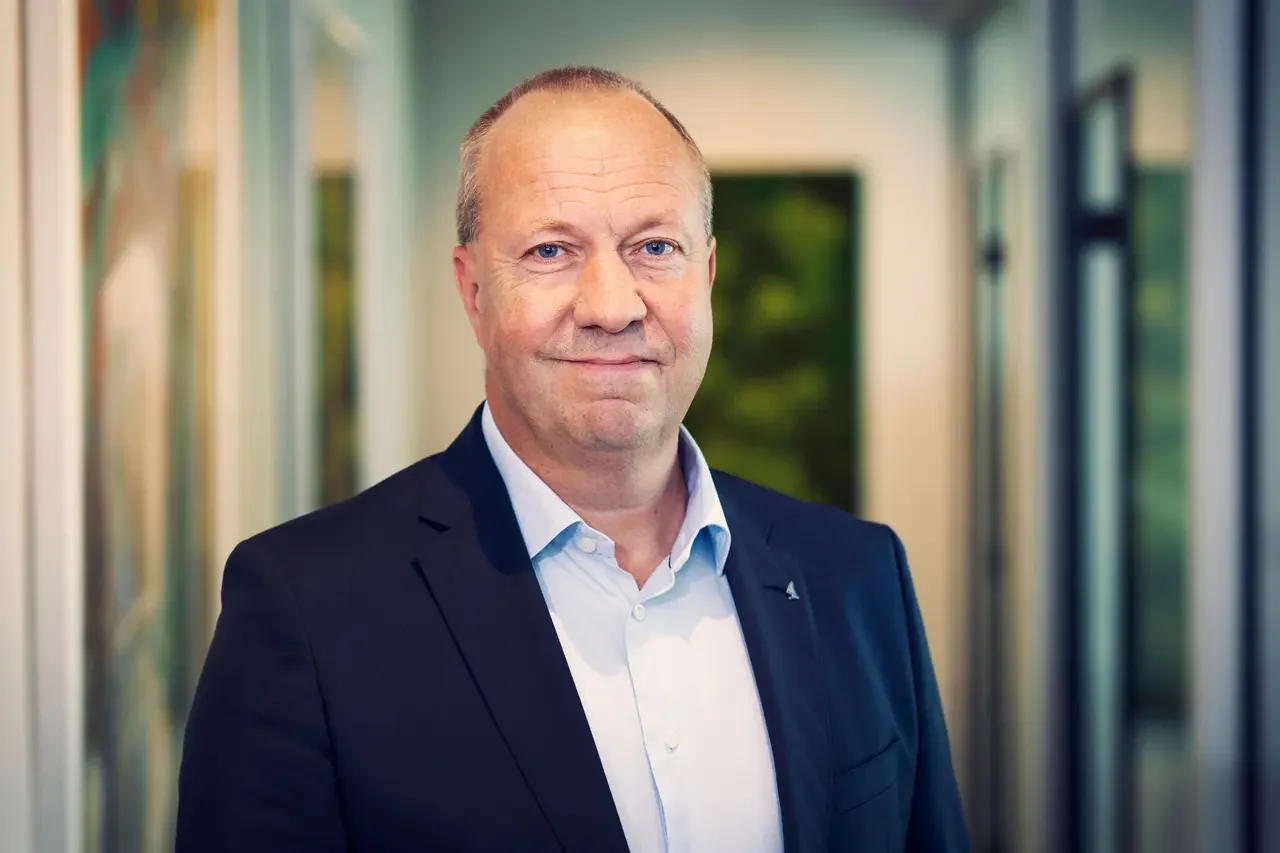
Long-term thinking without losing momentum
Long-term thinking without losing momentum
Family-owned companies are often associated with stability, continuity and a long-term perspective than many other ownership forms. This creates particular conditions for leadership. Direction, structure and commercial discipline need to be combined with trust, values and respect for the entrepreneurial spirit that has often shaped these companies from the very beginning. There are several lessons to draw on: how a long-term vision built on tradition, continuity or prudence can coexist with speed and development.
We recently met Per Gullstrand, CEO of Bjäre Invest, for a conversation about leadership in family-owned companies and how decentralisation, commercial discipline, social responsibility and trust can become decisive factors for both growth and long-term development.
At Alumni Global, we work in an advisory role alongside family-owned companies and their owners, boards and management teams. Through Lars Navéus we have known Per Gullstrand for many years and have worked with him in various roles. When Alumni Global had the opportunity to support Bjäre Invest in recruiting their first external CEO, Per was the chosen candidate.
Bjäre Invest is a family-owned group with roots on the Bjäre Peninsula and a portfolio of companies that has developed since the 1950s. Its ownership is not characterised by a short-term exit logic, but by a desire to build and develop companies that can remain strong over time. Today, the business includes companies in areas such as trade, machinery rental, agriculture, golf resort operations, and land and property. The portfolio includes, for example, Willab AB, Carepa AB, Kranpunkten AB and The National Golf & Resort AB. In addition, there are several smaller holdings in various companies. The breadth of the portfolio requires a governance model in which each company is given significant autonomy, while the owners and boards ensure long-term direction, structure and follow-up. Bjäre Invest’s ownership logic also includes a clear commitment to society, something that runs through all the family company’s businesses and has been particularly inspired by the Mats Paulssonstiftelserna, including initiatives linked to cancer research and Medicon Village in Lund. Together, this contributes to a culture in which commercial discipline, trust, responsibility and long-term thinking are closely connected.
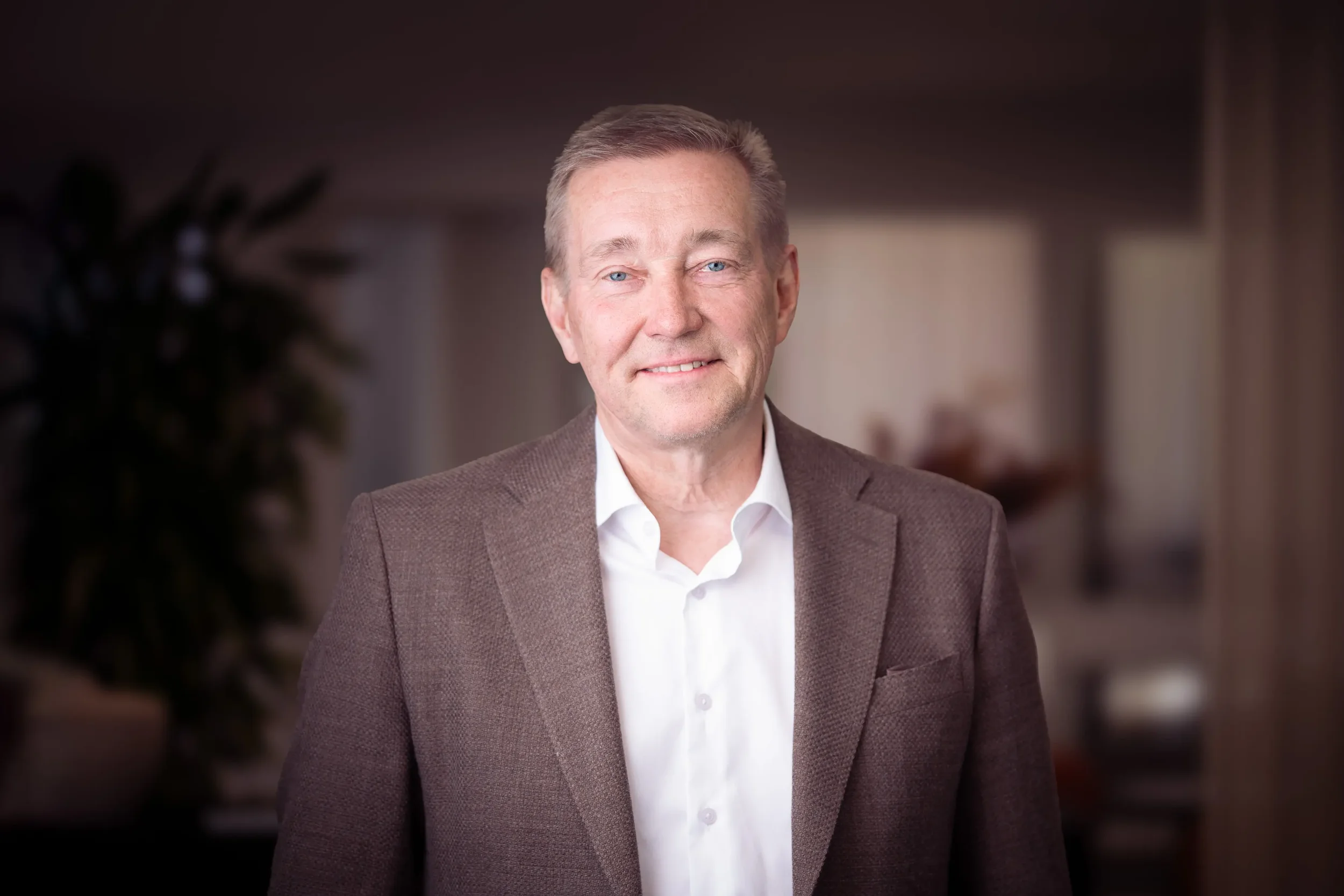
Per Gullstrand
Vd och koncernchef för Bjäre Invest
The common thread
When Per Gullstrand joined Bjäre Invest, the assignment was clear but also complex: to create a more cohesive structure for a broad portfolio of companies with different businesses, histories and circumstances.
The portfolio had grown over time, often through entrepreneurship, commitment and relationships. This also meant that the business consisted of many different types of companies, ranging from trade and machinery rental to agriculture, property, golf resort operations and other activities. Per’s first task was therefore to understand the context, speak with the family and create a common thread in what had previously been more fragmented.
“It was a bit like a mixed bag. We needed to get a grip on it and feel confident about what we wanted to build.”
“That is the balance I am constantly trying to find: how much should we do centrally, and what should the companies be allowed to do themselves?”
The challenge was to create control and direction without removing one of the portfolio’s strengths: the entrepreneurial spirit within the individual companies. The solution was a decentralised governance model in which the companies continue to have significant autonomy, while owners, boards and management teams work within clearer structures and follow-up processes. For Per Gullstrand, an important part of his assignment was to build a culture in which the companies could see that, together, they were part of something larger, with the strength of a committed owner behind them. Bringing the companies together through shared activities, such as golf competitions, football tournaments and other meetings where people from different businesses can get to know one another, strengthens relationships and context. It builds a sense that the companies are independent, but still part of something bigger.
Per emphasises that it is always about finding the right balance. Too much central governance risks reducing entrepreneurship. Too little cohesion can mean that the portfolio loses direction.
Professional like a listed company, but with a family heart
A central principle in Bjäre Invest’s governance is that the companies should be run professionally, without losing their family-owned character.
“We want to run this as professionally as a listed company, but with a family heart.”
“Key is having a skilled CEO and a strong management team in the companies. In every respect, it benefits us when the portfolio companies are given the space to run the business as if it were their own company.”
This means, among other things, that each company has a proficient CEO, an effective management team and boards with relevant expertise. Several boards also include external members with industry knowledge, which is important because the portfolio spans a number of different sectors.
It is not the role of the head office to run the businesses operationally. Bjäre Invest primarily governs through the ownership agenda, board work, the recruitment of the right leaders and regular follow-up.
It is a model that requires clarity but also trust. When decisions are made close to the business, leaders are needed who understand the commercial logic, but who can also see the owner’s perspective.
Long-term thinking requires pace in everyday work
A recurring theme in the conversation with Per is that long-term thinking should not be confused with a slower pace.
“When people say long-term, many think slow. But that is not the case, and we believe things should move quickly in day-to-day work. We should make many decisions and keep moving forward, while ensuring that we can live with those decisions over time.”
“To remain relevant, you have to understand AI. But the knowledge and drive should sit operationally within the companies’ management teams.”
This is an important distinction. In a family-owned company with a strong balance sheet and long-term owners, there is often scope to act without the same short-term pressure found in other ownership forms, but that freedom also requires responsibility. Every decision needs to be commercially sustainable and fit the direction in which the company is to develop over time. For Per, it is about daring to make decisions while always thinking a few steps ahead. Long-term thinking then becomes not a way of avoiding change, but a way of creating enough stability to change with direction.
One area that requires pace is adapting to AI and the digitalisation agenda, which is very much driven where knowledge of the business exists: out in the companies. The same principle applies here as in the wider governance model: centrally, one can set direction, define requirements and follow up, but development needs to take place close to the business. That is where the needs and opportunities are found. At present, for example, there are requirements to streamline administrative processes and digitalise sales processes with the help of AI.
Board work with a forward-looking focus
When the world around us changes rapidly, it is not enough for boards mainly to follow up on what happened in the previous quarter. Under Per’s leadership, Bjäre Invest has therefore changed the way the boards of its portfolio companies work.
When the boards meet in person, less time needs to be spent on historical reporting, which is instead handled through shorter monthly digital check-ins. Physical board meetings can then focus on forward-looking issues: what needs to be done, which decisions are required and how the company should develop further.
“The advantage has been that our boards have become very forward-looking. When we hold physical board meetings, we do not need to spend as much time on reporting and follow-up. We can lift our gaze and look ahead.”
According to Per, this has contributed to better control, but also increased momentum. Combined with the successful recruitment of forward-looking CEOs, several companies in the portfolio have developed strongly despite a turbulent external environment.
The right leader is business-critical
In a decentralised model, recruiting the right leaders becomes one of the most business-critical questions. Per describes leadership as the very key to creating development in the portfolio companies. The CEO must not only be able to run the company as it is today but also understand where it needs to be in three years’ time and have the ability to take the organisation there.
The qualities Bjäre Invest particularly values are commercial acumen, down-to-earth leadership, humility, long-term commitment and the ability to build trust. Industry knowledge is often valuable, but it is not enough. The leader must also fit into the environment and understand the responsibility that comes with long-term family ownership.
“We want down-to-earth people who are commercially minded and long-term in their outlook. People who come in and run things for a couple of years with the ambition of then moving on are not a very good fit here.”
This is also reflected in how management teams are recruited. The CEOs of the portfolio companies have a broad mandate to build their own teams; however, Per explains that Bjäre Invest applies a kind of grandfather clause. When final candidates have been identified, he meets them, and together they discuss what is best for the company.
In this way, independence within the companies is combined with the owner’s long-term ambitions.
Trust as a governance principle
In family-owned companies, trust is not an abstract value. It is a practical prerequisite for governance to work.
Per describes how the family today is engaged, curious and informed, but not involved in detailed operational decisions. This has required trust to be built over time. For the external CEO of a family-owned investment company, it is therefore crucial to understand both the business and the family’s way of thinking.
This creates a different kind of leadership environment from organisations where governance is primarily based on formal mandates and reporting structures. In a family-owned company, the leader acts independently, but must also be able to carry the owner’s perspective in order to set the direction for the business.
Building the next generation through responsibility and exposure
Like many other family-owned businesses, Bjäre Invest needs to relate to several generations at the same time. In the conversation, Per describes how three generations are present in the owning family, and how the next generation, based on its engagement, interest and curiosity, is gradually given the opportunity to come closer to the companies and deepen its understanding of the business.
But the generational perspective is not only about the owning family. It is also about how the portfolio companies develop future leaders. One example is the establishment by one portfolio company of a programme called the “Junior Management Board”. Through this, students follow the management team of a portfolio company for a year and contribute new perspectives on the company’s future. It is a concrete way of giving the next generation insight, responsibility and the opportunity to challenge established ways of thinking.
What other companies can learn from the family-owned perspective
Bjäre Invest’s example shows that family-owned enterprise does not have to mean a slower pace of change or a more cautious approach. On the contrary, a long-term ownership perspective can create decisiveness, provided it is combined with clear governance, the right leadership and a culture that supports the business.
Clear governance – A long-term ambition is not enough in itself; it must be translated into an ownership agenda, board work, follow-up and decisions that hold over time. When the direction is clear, the organisation can act quickly in everyday work without losing sight of the bigger picture.
Decentralisation requires skilled leaders – When responsibility and mandate sit close to the business, the CEO role becomes crucial. Leaders need to be able to drive the business independently, build teams and make decisions close to the market, while also understanding the owner’s long-term perspective.
Leadership for family-owned companies requires both structure and trust
Recruiting and developing leaders in family-owned companies requires a deep understanding of more than formal competence. The leader needs to be able to drive the business forward, while also fitting into the owner’s long-term ambition, culture and way of making decisions.
Alumni Global works long-term with owners, boards and management teams in family-owned companies to identify, attract and develop leaders who can combine commercial development with respect for the company’s identity. In these types of environments, the right leadership becomes not only a recruitment question, but a decisive part of the company’s future competitiveness.
Läs artikeln på svenska: Långsiktighet utan att tappa fart →
About Lars Navéus

Lars Navéus
Partner and Senior Consultant, Alumni Global
Email
Lars Navéus is a Partner and Senior Consultant at Alumni Global and has worked with executive search, board recruitment and strategic leadership advisory for almost three decades. He advises owners, boards and CEOs in listed, private equity-owned and family-owned companies, both in the Nordics and internationally.
Through his work with owner-led and family-owned companies, Lars has built particular experience of the leadership questions that arise when commercial development, owner intent, succession and culture need to be held together over time. Read more
“In family-owned companies, leadership is often closely linked to trust, long-term thinking and the ability to understand the owners’ perspective. It is rarely enough to find a skilled leader on paper. The person also needs to be able to operate in an environment where relationships, values and sustainable development across generations are highly significant.”
Contact us