Why trust matters as much as vision
What really matters most to a company’s long-term success? A clear vision? A strong strategy? Or the ability to make the right decisions? For Volito, the answer lies to a great extent in trust between people. In owners who are real people. In relationships and leaders who are given the freedom to act entrepreneurially while remaining accountable for the long-term development of the business. In our conversation with Ulf Liljedahl, CEO of Volito, he shares his experience of leading in an environment where values, culture and active ownership do not merely support the business, but form part of the business model itself.
When employees trust the owners, understand the direction and feel confident enough to act, something emerges that is difficult to create through processes or organisational charts. It can shorten the path from decision to action. Responsibility is delegated further into the organisation, and employees feel able to take initiative and invest their commitment in the company’s future.
Family-owned businesses often have particular conditions that foster this kind of trust and engagement. The owners are visible, the values are clear and the time horizon extends beyond the next quarterly report. But trust does not arise automatically; it must be built, earned and nurtured over time. It is a matter of mutual trust, enabling responsibility to be delegated, initiative to be taken and decisions to be translated into action.
At Alumni Global, we have worked with family-owned businesses and their owners, boards and executive teams for many years. One of these companies is Volito, a growth-oriented, family-owned investment company founded in 1991, with operations in real estate, industry and portfolio investments. Through Lars Navéus, Alumni Global supported the recruitment of Ulf Liljedahl as CEO and has since continued to act as a long-term adviser on leadership and talent management.
We met Ulf to discuss active ownership, leadership and why strong trust can be every bit as important to success as a clear vision.
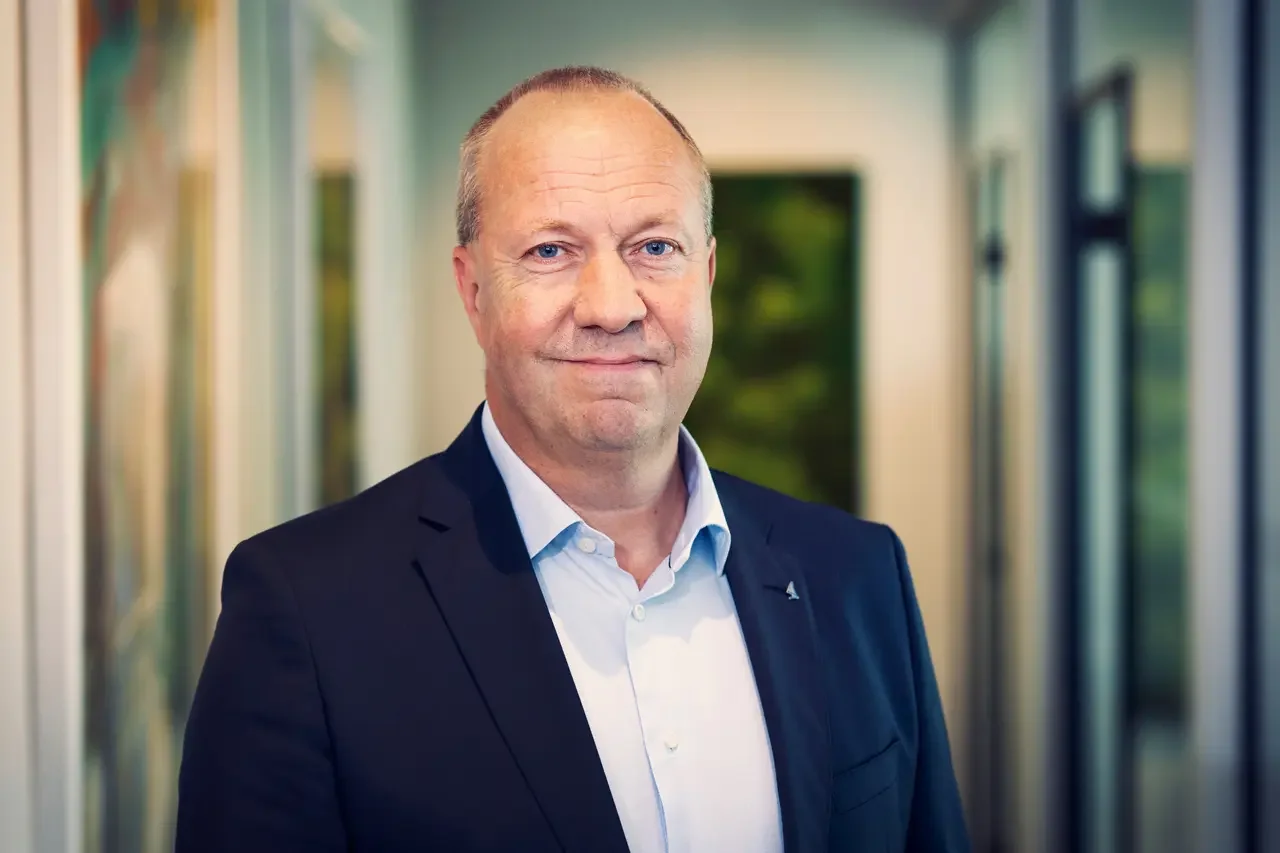
Ulf Liljedahl
President and CEO, Volito
Trust begins with visible ownership
When Ulf Liljedahl was recruited to Volito, he came from several senior roles in large international industrial companies. Moving into a family-owned investment company therefore meant entering a new context.
One of his responsibilities was to support the generational transition within the owning family. At the same time, the group was to continue developing in line with its vision of building value across generations.
“Family-owned businesses are distinguished not primarily by the ownership structure itself, but by the relationship between the owners and the business. Our owners are real people, not an anonymous capital market.”
In many family-owned businesses, ownership is visible and present. The owners do not represent an anonymous capital market, but are people who are directly engaged in the company’s development. This provides continuity and creates a clearer link between decisions, values and long-term ambitions. Financial objectives are viewed as part of a broader context and interact more clearly with values, culture and responsibility over time.
When values become more than words
At Volito, the values are intended to guide everyday decision-making rather than exist as a stand-alone statement. They provide a practical framework for how the business is led, how decisions are made and how relationships are built over time.
Trust lies at the heart of this. Volito describes it as the company’s most important asset and as something built through the interplay of two fundamental values: relationships and professionalism.
Relationships are about nurturing collaboration over time through loyalty, honesty and a long-term perspective. Professionalism is about expertise, flexibility and a clear focus on results.
Only when these two perspectives work together does the trust emerge that Volito regards as essential to both commercial success and long-term value creation.
“Through strong relationships and professionalism, we build trust that moves the company towards our vision”
In a family-owned business, values often take on particular significance because they represent not only the organisation, but also the owners’ view of how the business should be run. This can provide clarity for leaders and employees. When values remain consistent over time, they also become easier to put into practice in everyday work, from strategic investment decisions to the way people collaborate and engage with different stakeholders.
For Ulf Liljedahl, the connection is clear: a vision can point the way, but trust is what enables people to turn it into action. When employees, management and owners share the same values, they develop a common understanding of why decisions are made and where the company is heading. This is also when values become more than statements and evolve into a corporate culture and a competitive advantage that endure across generations.
From trust to the ability to act
Many people associate family-owned businesses with stability, careful consideration and a long-term perspective.
“A long-term perspective has to be earned; it does not happen by itself. To secure a mandate to invest for the future, the company must continuously deliver results, develop and demonstrate that it is creating value here and now.”
“Once we have made a decision, we move from decision to action incredibly quickly.”
Ulf wants to add nuance to the idea that a long-term perspective is the principal strength, emphasising that speed is also a major source of value at Volito. The company devotes considerable effort to analysis and evaluation, but once decisions have been made, the organisation acts quickly. This combination of rigorous analysis and a short path to decision-making is possible because trust is already in place. Fewer layers of approval and less internal alignment are needed before the organisation can act.
That does not mean every decision will be right. On the contrary, Ulf stresses the importance of an organisation being willing to experiment, learn and sometimes fail.
A culture where mistakes are allowed
For Ulf, a learning culture is essential to innovation. If people are to take initiative, test new ideas and develop the business, there must be room to fail. The organisation needs to feel secure enough to accept that not every decision will be perfect.
“It is better to try something and discover that it did not turn out as expected than not to try at all.”
This also applies to areas such as AI and digitalisation. Volito has established guidelines and policies, while also giving employees room to explore the technology, learn from using it and take responsibility for how it is applied. The value it creates depends on their ability to apply the technology to relevant problems.
Why family-owned businesses can have a particular strength
The ability to build trust over time is an advantage that family-owned companies often possess. When owners are present and consistent, they provide clarity about where the company is heading. When values are carried forward across generations, continuity is built. When relationships are valued as highly as financial results, trust between people grows stronger.
But this also brings responsibility. Family-owned businesses cannot take trust for granted. Just like a long-term perspective, trust must be earned through clear leadership, consistent decisions and a genuine commitment to developing the business.
Volito’s experience points to three principles from which other organisations can also draw inspiration:
Trust needs to be treated as a strategic asset, not as a soft cultural issue.
Employees need to understand and trust the decisions being made, not simply know what is to be done.
A long-term perspective is not only about having a longer time horizon, but about continually generating the results, trust and ability to act that make future investment possible.
What emerges from Volito’s story is that long-term success is shaped not only by what owners and leaders want to achieve, but also by how they create the conditions for others to contribute. Trust is therefore not a soft value sitting alongside strategy, but a practical prerequisite for the ability to act, take responsibility and develop over time.
Trust is not created by the organisational chart
Recruiting leaders to family-owned businesses is often about more than finding the right expertise. The leader needs to understand the ownership perspective, navigate the company’s culture and build relationships that stand the test of time.
In many family-owned businesses, trust between the owners, board and executive team is one of the most important assets. It influences how decisions are made, how quickly the organisation can act and how confident employees feel about taking responsibility.
Volito illustrates that trust is not a consequence of success. It is often one of the prerequisites for creating it.
When Alumni Global works with family-owned businesses, the assignment is therefore not only about identifying the right leader for today. It is about finding and matching individuals who can build and preserve the trust that makes it possible to create value across generations.
Läs artikeln på svenska: Ett förtroende lika viktigt som visionen
About the author

Lars Navéus
Partner and Senior Consultant, Alumni Global
Lars Navéus is a Partner and Senior Consultant at Alumni Global and has worked with executive search, board recruitment and strategic leadership advisory for almost three decades. He advises owners, boards and CEOs in listed, private equity-owned and family-owned companies, both in the Nordics and internationally.
“Family-owned businesses often have a unique opportunity to create continuity and a long-term perspective through their ownership. But what truly makes a difference is when values come to life in everyday work and build the trust that enables employees to take responsibility and develop the business over time.”
Contact us
Read some of our perspectives articles