Who Owns Succession in Uncertain Times?
Who Owns Succession in Uncertain Times?
Organisations are changing quickly as technology advances, global events unfold, and employee expectations shift. Many senior leaders are approaching retirement, but there are fewer ready successors. Changes in demographics and career goals are reshaping the leadership pipeline.
All these trends make it both more urgent and harder to answer a key question: What kind of leadership will we need next?
Key Takeaways
Succession is becoming more urgent because of major trends like technological change, global uncertainty, and generational shifts.
Boards routinely identify succession as needing greater focus and improvement.
The main challenge is defining future leadership amid uncertainty, not just replacing leaders.
Organisations often choose familiar types of leaders, even when the future may require different skills.
Effective succession needs owners, boards, executives, and HR to work together and share responsibility.
When we talk with company owners, CEOs, board members, and HR leaders, we see this uncertainty around what will come next firsthand. Traditional leadership profiles are not as helpful as they used to be. Experience by itself no longer ensures future success. Despite this growing complexity, succession often remains one of the least developed areas of leadership practice.
In our non-executive board dialogues executive succession is also often a “bad conscience”. In Alumni Global’s recurring board evaluations across Nordic listed and private companies, succession management averages just above 4 on a 1–6 scale where most other governance areas cluster around 5 or higher. The pattern is reinforced in qualitative discussions: succession is acknowledged, occasionally discussed, but rarely owned with the same rigour as strategy, performance, or governance processes. The result is a quiet but persistent gap between intent and preparedness, where boards know they should be further ahead than they are.
When the Ground Beneath Leadership Is Shifting
Several forces are converging at once. Technological development is changing how decisions are made and how organisations operate. Global volatility is increasing the need for judgment under uncertainty. At the same time, employee expectations are evolving, with greater emphasis on purpose, flexibility, and leadership authenticity.
On top of this, there is a generational shift happening. Many current senior leaders gained experience in stable environments with clear hierarchies and long-term plans. The next generation is coming into leadership through more varied and less traditional career paths, bringing new strengths and different expectations.
This is creating a bigger gap between the leadership experience organisations have now and the skills they will need in the future.
Converging Forces Reshaping the Leadership Pipeline
Demographic
A major generational shift is happening at the top of many organisations. The Baby Boomer generation, which has held many senior leadership and board roles, is retiring over a short period. Unlike in the past, when leadership changes were more spread out, many organisations now face several senior departures at once. This raises the risk of losing knowledge and leadership continuity, and puts extra pressure on succession plans that may not be ready for such rapid change.
Thinner leadership pipelines
In recent decades, changes like flatter hierarchies, leaner operations, and more talent movement have reduced the number of traditional roles where future leaders could gain experience. Career paths are less straightforward, and people stay in roles for less time. While many organisations have talented people, there are often only a few leaders who are truly "ready now." This makes transitions risky, as organisations must either quickly develop talent or look outside for skills they have not built internally.
Changing career expectation
Many younger professionals are making more deliberate career choices. Traditional executive roles, often associated with high personal demands, constant visibility, and limited flexibility, are not always as attractive as they once were. Instead, we see a growing emphasis on purpose, balance and more flexible career paths. Some opt for portfolio careers or specialist tracks rather than pursuing hierarchical advancement. This is not a question of reduced ambition, but of changing definitions of success. For organisations, however, it means that the pipeline of aspiring senior leaders is not only smaller in some contexts, but also less uniformly aligned with traditional leadership paths.
Increasing role complexity
Today’s senior leaders are expected to operate across a far broader and more demanding landscape than before. They must navigate digital transformation, geopolitical uncertainty and regulatory demands, while leading more diverse, distributed and expectation-driven organisations. The scope of leadership has expanded, and so have the capabilities required. As a result, even where strong leadership talent exists, fewer individuals are seen as fully prepared to step into senior roles without further development. The gap between potential and immediate readiness becomes more visible.
The Real Succession Challenge
In this context, succession becomes a question of interpretation. Boards and leadership teams are not only deciding who could take over, but what leadership should look like going forward. And that is a more complex judgment than in the past.
In situations of uncertainty, there is often a natural tendency to lean towards what feels credible and known. Familiar profiles, proven track records and visible internal candidates can provide reassurance. But a decision that feels safe is not always the one best aligned with what the organisation will need next.
One of the most noticeable shifts we see is that leadership is being redefined not formally, but in practice. In our work around sustainable leadership, several capabilities consistently emerge as increasingly critical: a growth mindset, cognitive agility, and the ability to create safety, trust and clear direction in uncertain environments. Underpinning these is something more fundamental: authentic connection, grounded in self-awareness and clarity about one’s own values and drivers.
When leadership is defined in these terms, rather than through traditional career paths or familiar profiles, the focus moves from continuity to capability.
Ownership in a More Complex Landscape
As the leadership question becomes more complex, so too does the question of ownership. Succession cannot sit comfortably within a single function. It touches on governance, strategy, culture and long-term value creation.
We increasingly see that effective succession requires alignment across several actors:
Owners, who establish overall governance and direction, and nomination committees, who oversee leadership appointments and transitions, set expectations for leadership continuity and ensure succession remains a strategic priority.
Boards, which shape the direction and challenge assumptions about future leadership needs.
CEOs and executive teams translate this into identifying and developing future leaders.
HR designs and implements succession frameworks, tracks progress, provides assessment tools, and ensures continuity and consistency in succession planning across the organisation.
And yet, despite this shared responsibility, succession often lacks the same level of structure and follow-through as other strategic priorities. In our board advisory work, succession is regularly discussed, but there is limited clarity on how it is actively driven between those discussions. This gap between awareness and action is where many organisations risk falling behind.
Looking Ahead
Succession is a conversation about what an organisation will need from its leadership in a changing business environment. How will you best navigate future uncertainty and prepare your organisation for what comes next?
Reflective Questions
How clearly has your organisation defined what leadership will require in the next phase?
Where might familiarity be influencing succession decisions more than future relevance?
How consistently is succession translated from discussion into action in your organisation?
And who is actively shaping the answer to what leadership should look like going forward?
About the author
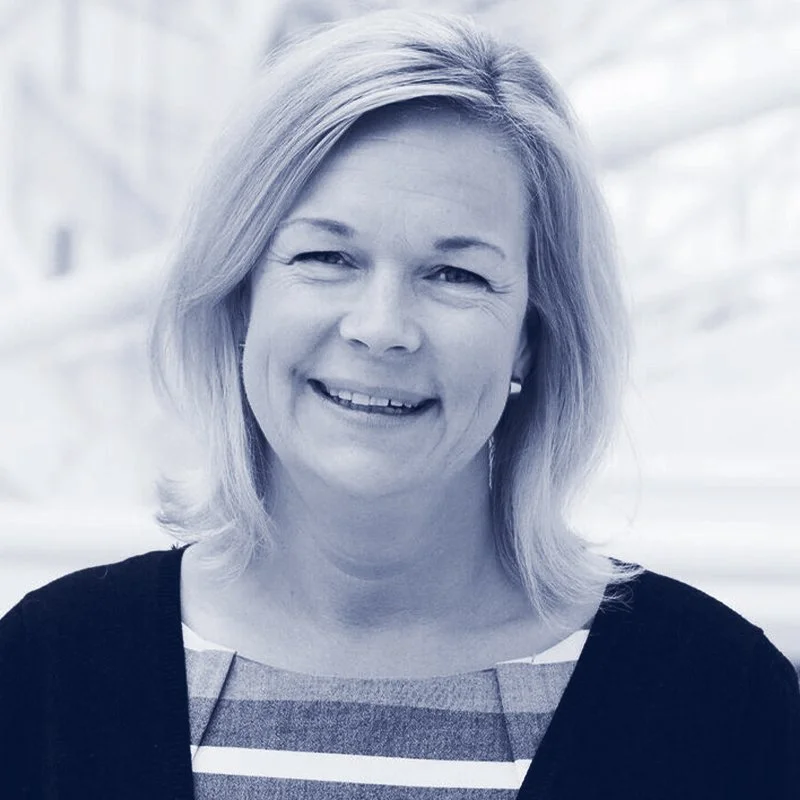
Partner, Deputy CEO and Managing Director, Nordics, Alumni Global
Åza Skoog is Partner, Deputy CEO and Managing Director, Nordics, at Alumni Global.. She brings more than 25 years of experience in leadership and talent advisory, supporting organisations in building strong leadership teams and driving sustainable growth.
Her work focuses on helping clients develop their businesses and people, with particular emphasis on growth and transformation. Drawing on her own experience of building and leading successful operations, Åza offers a practical perspective on how to secure the right capabilities to scale organisations and meet evolving market demands.
—> Read the full bio here
At Alumni Global, we believe that the key to unleash potential in people and organisations is great leadership. Partnering with you, we help equip your organisation to make a difference.
We tailor our wide range of leadership services to your unique requirements, helping your organisation thrive and support your people’s professional development.
Our portfolio of services includes:
Do reach out for a dialogue about your unique situation and requirements.
Contact us

Perspectives
The People Agenda: A Key to Build Geopolitical Resilience?

Perspectives
Leadership for a People-Centric Future

Perspectives