Leadership for a People-Centric Future
Leadership for a People-Centric Future

In an age where digital transformation dominates the corporate agenda, a quieter — but equally vital — transformation is underway. It’s not about artificial intelligence, platforms, or automation. It’s about people. Or more precisely: how we lead, invest in, and strategically leverage human potential.
In today’s knowledge economy it is important to remind ourselves that the people of any organisation is an asset to develop. Not a cost to control. Failing to do so, can be commercially dangerous.
A Cost-Heavy Line Item or the Engine of Value?
Ask any CFO where the majority of operational expenditure goes, and the answer is almost always the same: people. Salaries, benefits, training, and associated costs regularly make up the larger portion of a company’s budget. Yet many organisations still fail to ask the more strategic question: What return are we generating on this investment?
When viewed through a traditional lens, human capital is seen as a fixed cost — but when seen through a leadership lens, it becomes a dynamic source of value. Productivity, customer satisfaction, innovation, loyalty — all of these are powered by people. Not platforms.
This is not a call for softer leadership. It’s a call for smarter leadership.
Culture Is a Business Lever — Not a Slogan
Talk of “culture” is sometimes dismissed as soft or intangible — something that “sits in the walls.” But culture can be used as a deliberate and measurable tool of business execution.
The culture of any organisation should be the very fabric influencing how employees interact, make decisions, and approach their work. A strong, positive culture can drive performance, foster innovation, and create a sense of belonging among employees. It can be the difference between a company that merely survives and one that thrives.
When leaders actively shape and nurture their organisation's culture, they create an environment where employees feel valued and motivated. This, in turn, leads to higher levels of engagement, productivity, and loyalty.
Moreover, a well-defined culture can serve as a powerful recruitment and retention tool. In a competitive job market, top talent is drawn to organisations with a strong, positive culture. They want to work for companies that align with their values and where they feel they can make a meaningful impact.
Leadership Must Own the People Agenda
Historically, talent strategy has sat with HR, while the executive team focused on revenue, product, and technology. That division is no longer viable.
When human capital represents the lion’s share of spend — and the primary source of competitive advantage — the people agenda belongs in the boardroom. Leaders must move beyond treating engagement and culture as side projects, and instead measure and manage them with the same rigour as financial KPIs.
This shift isn’t about replacing HR — it’s about elevating people to the heart of strategic decision-making.
“As technology becomes more accessible, competitive advantage ultimately comes down to people. Our people are our competitive edge—and what makes us better.”
The New ROI: Return on Intention
Organisations that embed people strategy into business strategy don’t just retain talent — they create momentum. They align internal energy with external opportunity. They transform human potential into market value.
And the benefits are measurable. Companies that invest in leadership development, engagement, and cultural alignment are not only more resilient — they are more profitable. More innovative. More attractive to top talent.
A Call to Courageous Leadership
Prioritising people requires courage. It asks leaders to think longer term, to shift from efficiency to effectiveness, and to invest in what is often harder to measure but impossible to replicate: human capability.
About the author

Partner, Deputy CEO and Managing Director, Nordics, Alumni Global
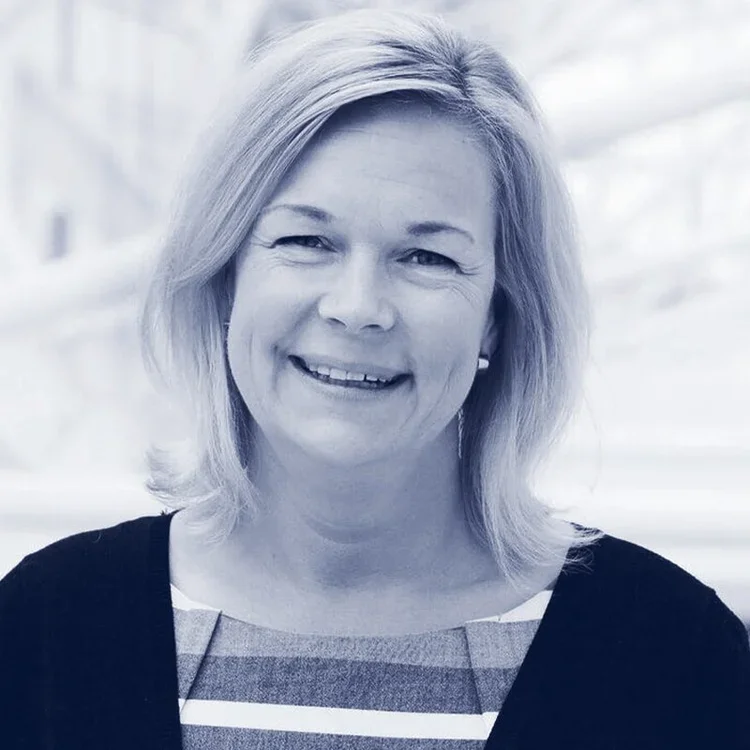
Åza Skoog is Partner, Deputy CEO and Managing Director, Nordics, at Alumni Global. She brings more than 25 years of experience in leadership and talent advisory, supporting organisations in building strong leadership teams and driving sustainable growth.
Her work focuses on helping clients develop their businesses and people, with particular emphasis on growth and transformation. Drawing on her own experience of building and leading successful operations, Åza offers a practical perspective on how to secure the right capabilities to scale organisations and meet evolving market demands.
Based on insights from decades of interactions with business leaders and knowledge from leadership theories and research, we at Alumni Global claim that building durable businesses requires leaders who show characteristics that include humanity, authenticity, drive for growth and an agile mindset. We have established processes to identify these competencies in leaders and tools to assess and develop them. You can read more about what is needed of our leaders in today’s business landscape here .
If we can help you with any area of leadership acquisition or development please do reach out.
Contact us

Perspectives
The People Agenda: A Key to Build Geopolitical Resilience?

Perspectives
The Power of Meaningful Conversations to Bridge Divides

Perspectives